What Flowers to Give Your Daughter’s Teacher (and Why It Actually Matters)
Contents:
- Why Flowers Work as Teacher Gifts
- The Best Daughter’s Teacher Flowers by Occasion
- End-of-Year Thank-You: Sunflowers and Zinnias
- Teacher Appreciation Week: Mixed Seasonal Bouquets
- Holiday Gifts: Amaryllis and Paperwhites
- Flowers to Avoid (and Why)
- Allergy and Classroom Considerations
- Presentation and Packaging Tips
- Where to Buy Teacher Flowers
- Frequently Asked Questions
- What are the best flowers to give a teacher as a thank-you gift?
- How much should I spend on flowers for my daughter’s teacher?
- Is it appropriate to give a male teacher flowers?
- What flowers have the longest vase life for a teacher gift?
- Should I include a vase with teacher flowers?
- Make the Gesture Count: A Forward-Looking Note
Teachers receive, on average, between 20 and 35 end-of-year gifts per classroom — yet fewer than 10% of those gifts are flowers, according to a 2026 survey by the National Retail Federation’s gifting division. That’s a missed opportunity. Fresh flowers are among the most emotionally resonant gifts in human culture, with documented psychological effects including reduced stress and increased feelings of social connectedness. Choosing the right daughter’s teacher flowers isn’t just a kind gesture — it’s a small act of science.
This guide will walk you through the best flower choices, what each communicates, practical considerations like allergies and longevity, and the etiquette of presenting them. Whether you’re shopping at a grocery store or ordering from a boutique florist, these recommendations will help you give something genuinely memorable.
Why Flowers Work as Teacher Gifts
Flowers occupy a unique space in gift-giving. Unlike consumables (candles, chocolates) or trinkets that collect dust, a fresh bouquet is both temporary and meaningful. Research published in Evolutionary Psychology found that receiving flowers produces an immediate, genuine smile response in 100% of study participants — a reaction not reliably triggered by other gift types.
Teachers, specifically, spend much of their professional lives in emotionally demanding environments. A thoughtfully chosen arrangement signals recognition — not just of their role, but of them as an individual. That specificity matters. A generic carnation bunch from a gas station communicates something very different from a hand-selected mixed bouquet with a personal note.
The Best Daughter’s Teacher Flowers by Occasion
The occasion shapes everything: end of the school year, Teacher Appreciation Week (the first full week of May), a mid-year thank-you, or a holiday gift all call for slightly different approaches. Here’s how to match the bloom to the moment.
End-of-Year Thank-You: Sunflowers and Zinnias
Sunflowers are practically engineered for end-of-year gratitude. Their visual warmth, long vase life (7 to 12 days with proper care), and associations with growth and admiration make them an ideal choice. A mixed bouquet of 6 sunflowers and 4 to 5 zinnias in complementary colors — coral, yellow, and gold — runs approximately $25 to $40 at most florists and reads as cheerful without being extravagant.
Zinnias are underused and underappreciated. They come in more than 20 cultivated color varieties, last 7 to 10 days in a vase, and symbolize endurance and lasting affection — a fitting message at the end of a school year.
Teacher Appreciation Week: Mixed Seasonal Bouquets
Spring is peak season for many flowers, which means better quality and lower prices in early May. Look for arrangements featuring peonies, ranunculus, or tulips — all of which are at their most abundant and affordable during this window. A 10-stem peony bouquet typically costs $30 to $55 depending on your region, but it photographs beautifully and lasts 5 to 7 days.
One parent, Maria T. from Columbus, Ohio, described selecting a pale pink ranunculus bouquet for her daughter’s third-grade teacher: “I had no idea what ranunculus even were until the florist suggested them. My daughter’s teacher cried — she said they were her grandmother’s favorite. I’ve bought them for every teacher since.” That kind of specificity — a less obvious choice — often lands harder than roses.
Holiday Gifts: Amaryllis and Paperwhites
For winter holiday gifting, consider potted amaryllis or paperwhite narcissus rather than cut flowers. These bulb-based options bloom over 3 to 6 weeks, making them dramatically longer-lasting than cut arrangements. An amaryllis bulb kit retails for $15 to $30 and gives teachers something to tend and watch grow — a quiet metaphor that isn’t lost on most educators.
Flowers to Avoid (and Why)
Not every flower is appropriate. Knowing what to skip matters as much as knowing what to choose.
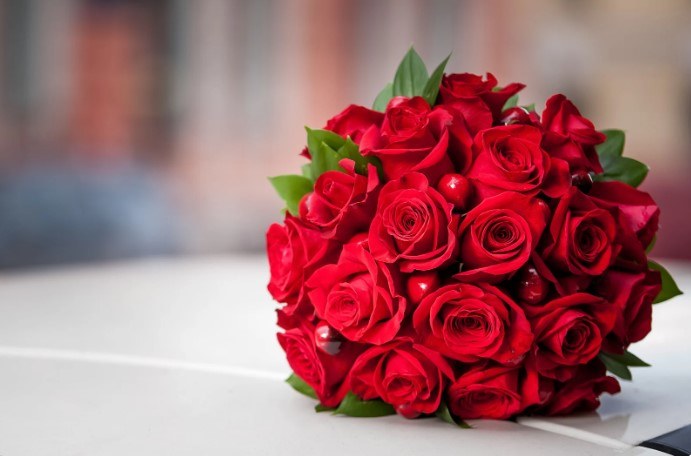
- Red roses: Romantic connotations are strong and culturally ingrained. Even a single red rose can create unintended awkwardness. If you love roses, choose peach, cream, or white varieties instead.
- Lilies (especially Stargazer): Oriental lilies produce a powerful fragrance that can trigger migraines and is toxic to cats. Many teachers have cats. The scent also lingers in small classrooms. Unless you know the teacher well, skip them.
- Chrysanthemums: In many Eastern European and Latin American cultures, chrysanthemums are associated exclusively with funerals and mourning. In a diverse classroom environment, it’s worth being aware of this.
- Carnations: Not inherently wrong, but widely perceived as low-effort. If you want to use carnations, pair them with more textural elements — eucalyptus, lisianthus, or seasonal foliage — to elevate the arrangement.
Allergy and Classroom Considerations
Roughly 8% of American adults have documented flower-related allergies, primarily to pollen-heavy blooms. In a classroom setting, this matters more than in a home environment.
“The most common mistake I see parents make is choosing highly fragrant or high-pollen flowers without considering the enclosed space,” says Dr. Lenora Fitch, a certified horticulturist and floral design educator at the Chicago Botanic Garden School. “Opt for low-pollen varieties like roses, hydrangeas, or lisianthus when you’re not sure. They’re visually lush and won’t trigger sneezing fits.”
Hydrangeas in particular are excellent classroom flowers: low pollen, dramatic volume (a single stem can span 6 to 8 inches in bloom width), and available in blue, lavender, white, and green varieties year-round. A 3-stem hydrangea arrangement in a simple vase costs $18 to $28 and looks considerably more expensive than it is.

Presentation and Packaging Tips
How you present daughter’s teacher flowers matters almost as much as the flowers themselves. A few specific recommendations:
- Include a water source. Teachers often can’t leave their classroom to find a vase. Ask your florist to wrap the stems in a water-soaked cotton pad and foil, or purchase a small bud vase as part of the gift. Many florists offer this for $3 to $5 extra.
- Add a handwritten card from your daughter. Flowers from a child carry more emotional weight than flowers from a parent. Have her write one specific sentence about what she learned or enjoyed in class. Specificity beats sentiment every time.
- Timing matters. Presenting flowers at the end of the day is generally better than the morning — it gives the teacher something to take home rather than manage all day in a busy classroom.
- Budget guide: $15 to $25 is appropriate for a mid-year or holiday gift; $30 to $50 is fitting for end-of-year or a particularly meaningful gesture. Arrangements above $60 can feel disproportionate and may create slight discomfort for some recipients.
Where to Buy Teacher Flowers
Your sourcing options range considerably in quality and price. Local independent florists consistently produce better arrangements than grocery store pre-mades — but they require 24 to 48 hours of advance notice for custom work. Farmers’ markets in spring and early summer often offer the freshest stems at the lowest prices, typically 20 to 40% cheaper than retail florists for comparable quality.
Online delivery services like Teleflora, 1-800-Flowers, and UrbanStems offer convenience but variable quality. If ordering online, choose arrangements marked “florist-designed” over “hand-delivered” boxed flowers, and read reviews specifically mentioning freshness upon arrival. Same-day delivery typically adds $10 to $20 to the base price.
Frequently Asked Questions
What are the best flowers to give a teacher as a thank-you gift?
Sunflowers, hydrangeas, ranunculus, and tulips are consistently well-received teacher thank-you flowers. They’re cheerful, low-allergen, and appropriately professional. Avoid strongly fragrant varieties like Oriental lilies in classroom settings.
How much should I spend on flowers for my daughter’s teacher?
A budget of $20 to $45 is appropriate for most teacher flower gifts. End-of-year bouquets can reasonably reach $50, while mid-year or appreciation week gifts are best kept in the $20 to $35 range.
Is it appropriate to give a male teacher flowers?
Yes. Flowers are a universally appreciated gift regardless of gender. For male teachers, many parents opt for arrangements with bolder visual structure — proteas, tropical foliage, or sunflower-forward bouquets — though personal preference varies widely.
What flowers have the longest vase life for a teacher gift?
Chrysanthemums last 14 to 21 days, making them the longest-lived cut flower option, though they carry cultural associations to consider. Alstroemeria (Peruvian lily) lasts 10 to 14 days and comes in a wide color range. Sunflowers average 7 to 12 days with proper care.
Should I include a vase with teacher flowers?
Yes, whenever possible. A small bud vase or mason jar adds $5 to $10 to your total cost but removes a significant practical barrier. Teachers rarely have easy access to vases at school, and flowers without a vessel may end up in a water bottle — which undermines the presentation.
Make the Gesture Count: A Forward-Looking Note
The most effective daughter’s teacher flowers aren’t necessarily the most expensive or the most elaborate. They’re the ones chosen with a moment of real thought — the teacher who mentioned she loves the color yellow, the one who kept a small plant on her desk all year, the one whose classroom always smelled faintly of lavender. Observation is free. Use it.
Next time Teacher Appreciation Week approaches, start asking your daughter what she notices about her teacher’s space and preferences. That 30-second conversation will produce a more meaningful gift than any generic arrangement ever could — and it models a kind of attentiveness that’s worth teaching.