What Flowers to Give Your Dog Groomer: A Thoughtful Gift Guide
Contents:
- Why Flowers Are an Ideal Gift for a Dog Groomer
- The Toxicity Factor: Choosing Pet-Safe Dog Groomer Flowers
- Flowers to Absolutely Avoid
- The Safe, Beautiful Alternatives
- Seasonal Picks: Best Dog Groomer Flowers by Time of Year
- Spring (March–May)
- Summer (June–August)
- Fall (September–November)
- Winter (December–February)
- The Eco-Friendly Angle: Sustainable Sourcing for Your Bouquet
- Practical Tips: How to Present the Bouquet
- DIY Bouquet Assembly for the Hands-On Giver
- FAQ: Dog Groomer Flowers
- Are roses safe to give at a dog grooming salon?
- What is the best flower bouquet to give a dog groomer as a thank-you gift?
- How much should I spend on flowers for my dog groomer?
- Can I give a dog groomer potted plants instead of cut flowers?
- When is the best time to give flowers to a dog groomer?
- Make It a Habit, Not Just an Occasion
In Victorian England, the language of flowers — called floriography — was a serious social science. People sent coded bouquets to express gratitude, admiration, and affection without uttering a word. A yellow rose meant friendship; a sprig of lavender, devotion. Fast forward to today, and that silent vocabulary is still alive in the small, meaningful gestures we make toward people who care for the things we love most. Your dog groomer is one of those people. They keep your pet comfortable, clean, and healthy — and a well-chosen bunch of dog groomer flowers is a tangible way to say “I see the work you do.”
This guide walks you through exactly which blooms to choose, which to avoid, and how to present them in a way that’s both beautiful and responsible.
Why Flowers Are an Ideal Gift for a Dog Groomer
Gift cards are fine. Treats are appreciated. But flowers carry a dimension that consumables don’t — they transform a workspace. A grooming salon is a high-sensory environment: loud dryers, wet dogs, the chemical tang of shampoo. A fresh bouquet on the reception counter changes the atmosphere immediately. Research from Rutgers University found that people who received flowers reported elevated mood scores for up to three days after receiving them.
Beyond mood, flowers signal intentionality. You didn’t grab something from a checkout line. You thought about it. That matters to service professionals who often feel invisible, especially in pet care industries where the animal gets most of the attention and the human doing the work gets a quick “thanks.”
Flowers are also universally appropriate. Unlike food gifts (allergies, dietary restrictions) or candles (fragrance sensitivities in a salon environment), a bouquet of fresh-cut stems is almost always welcome — provided you choose the right ones.
The Toxicity Factor: Choosing Pet-Safe Dog Groomer Flowers
Here’s where the horticulture gets critical. Grooming salons have dogs in them — sometimes dozens per day. A curious Lab mix can easily nose into a vase on a low shelf. Some of the most popular florist flowers are severely toxic to dogs.
Flowers to Absolutely Avoid
- Lilies (all species): Even minor ingestion of Lilium or Hemerocallis species can cause acute kidney failure in dogs. The ASPCA lists these as highly toxic.
- Tulips: The bulb contains tulipalin A and B, alkaloids that cause gastrointestinal distress and cardiac issues.
- Daffodils: Lycorine in the stem and flower head causes vomiting, drooling, and in large doses, cardiac arrhythmia.
- Foxglove: Contains cardiac glycosides. Even small amounts are dangerous.
- Hydrangea: Mildly toxic — contains cyanogenic glycosides that can cause vomiting and lethargy.
The Safe, Beautiful Alternatives
- Sunflowers (Helianthus annuus): Non-toxic, bold, cheerful, and available year-round. A 10-stem bunch typically costs $12–$18 at a grocery store or farmers market.
- Gerbera daisies: Vibrant colors, long vase life (7–10 days), and completely safe for dogs. An excellent choice for a bright, high-contrast arrangement.
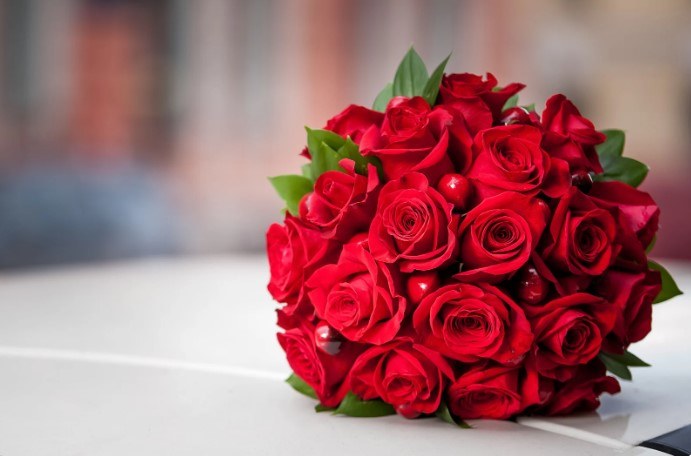
- Roses: The classic option. Thorns can be an issue in a busy workspace, so ask your florist to de-thorn the stems. Avoid spray roses treated with pesticides — more on that below.
- Lavender (Lavandula angustifolia): Mildly calming for both dogs and humans, and the light fragrance isn’t overpowering. Dried lavender bundles last for months.
- Snapdragons: Non-toxic, dramatic in arrangements, and available in dozens of color combinations.
- Zinnias: Especially vibrant from late spring through fall; they’re one of the easiest summer flowers to source locally.
Seasonal Picks: Best Dog Groomer Flowers by Time of Year
Seasonal flowers are fresher, longer-lasting, and usually 20–30% cheaper than out-of-season imports. A horticulture principle worth remembering: the shorter the distance between the field and the vase, the better the bloom.
Spring (March–May)
Peonies, snapdragons, and ranunculus are at peak availability. A mixed peony and snapdragon arrangement in blush and white tones reads as upscale without a luxury price tag — expect to pay $30–$45 at a local florist.
Summer (June–August)
Sunflowers, zinnias, and lisianthus thrive in this window. Lisianthus is especially underrated — it mimics the look of a rose or peony but often costs half as much and lasts nearly two weeks in water.
Fall (September–November)
Warm-toned arrangements with gerbera daisies, marigolds (safe for dogs), and dahlias feel seasonally appropriate and tend to photograph beautifully. Dahlias are especially prized by florists for their geometric complexity — they’re grown in US hardiness zones 8–11 but shipped nationally from Pacific Northwest growers.
Winter (December–February)
Amaryllis (avoid — mildly toxic) is common in winter displays, so stick to roses, carnations, and eucalyptus sprigs. Eucalyptus is a popular filler; note that in large quantities it can cause mild GI upset in dogs, so use it sparingly or as a dried accent rather than a large fresh bunch.
The Eco-Friendly Angle: Sustainable Sourcing for Your Bouquet
The US imports roughly 80% of its cut flowers, primarily from Colombia and Ecuador, according to the USDA Economic Research Service. While these supply chains have improved in recent years, there are real environmental costs: refrigerated air freight, pesticide use, and significant water consumption on export farms.
For the eco-conscious DIY gift-giver, a few strategies make a real difference:
- Buy from a local farmers market: Many urban and suburban markets carry fresh-cut stems from within a 100-mile radius, especially May through October.
- Look for Rainforest Alliance or Fair Trade certified flowers: These certifications indicate better environmental and labor standards on the farm.
- Choose dried or preserved arrangements: A dried lavender bundle or a preserved rose dome has zero transport emissions after purchase and lasts for years. These make a particularly meaningful gift for a groomer you see regularly.
- Wrap in kraft paper or seed paper: Skip the plastic cellophane. Seed paper wrapping — embedded with wildflower seeds — can be planted after the gift is opened.
- Grow your own: If you’re a DIY gardener, cutting from your own garden (sunflowers, zinnias, marigolds) gives the most personal and lowest-footprint option possible.
Practical Tips: How to Present the Bouquet
Presentation matters almost as much as the selection. A few specifics:
- Re-cut stems at a 45-degree angle just before handing over the bouquet. This increases surface area for water uptake and can extend vase life by 2–3 days.
- Include a small card with care instructions — a groomer’s day is hectic, and a simple note (“change water every 2 days, trim stems weekly”) shows you thought about the after-experience.
- Use a mason jar or wrapped vase instead of just tissue paper, so they can display it immediately without hunting for a container.
- Give it at drop-off, not pick-up. At pick-up, they’re handing off your dog and managing other clients. At drop-off, there’s a natural pause that allows for a genuine moment of connection.
- Budget guidance: $25–$45 is the sweet spot for a professional thank-you bouquet in most US markets. Under $15 can look perfunctory; over $60 can feel awkward in a service relationship.
DIY Bouquet Assembly for the Hands-On Giver
Assembling your own arrangement is simpler than most beginners expect. The core principle is the “focal-filler-foliage” rule used by professional florists:
- Focal flowers (1–3 types): The stars of the arrangement. Think gerbera daisies, sunflowers, or garden roses. Use 5–7 stems.
- Filler flowers: Smaller blooms that add texture and volume. Baby’s breath, wax flower, and statice are all non-toxic and widely available. Use 4–6 stems.
- Foliage: Greenery grounds the arrangement. Eucalyptus (use sparingly), salal, and ruscus are common choices. 3–5 stems is enough.
Start by arranging foliage as your base, then add focal flowers at varying heights (vary stem length by 2–3 inches between each flower), and fill gaps with filler blooms. Secure with floral tape or a rubber band wrapped in twine for a clean, handmade look.
FAQ: Dog Groomer Flowers
Are roses safe to give at a dog grooming salon?
Yes. Roses are non-toxic to dogs according to the ASPCA. Ask your florist to remove thorns from the stems before presenting the bouquet, as thorns can be a minor hazard in a busy grooming environment.
What is the best flower bouquet to give a dog groomer as a thank-you gift?
A mixed bouquet of sunflowers, gerbera daisies, and snapdragons is an ideal choice. All three are non-toxic to dogs, widely available year-round, have a vase life of 7–10 days, and present beautifully together in warm or mixed color palettes.
How much should I spend on flowers for my dog groomer?
A thoughtful professional thank-you bouquet typically runs $25–$45 at a US florist or upscale grocery store. Farmers market stems are often fresher and 15–25% less expensive than retail florists for the same quality.
Can I give a dog groomer potted plants instead of cut flowers?
Yes, with one caveat: choose pet-safe species. Non-toxic potted options include African violets, spider plants, and Boston ferns. Avoid pothos, peace lilies, and philodendrons, which are toxic to dogs.
When is the best time to give flowers to a dog groomer?
Around the holidays (November–December), at the end of a long grooming relationship before a move, or simply as a spontaneous appreciation gesture. Drop-off is better than pick-up, as groomers are less busy at the start of an appointment.
Make It a Habit, Not Just an Occasion
The floriography tradition the Victorians practiced wasn’t about grand gestures — it was about consistency. Small, considered expressions of gratitude, repeated over time, built real relationships. Your dog groomer likely sees dozens of clients a week. A seasonal bouquet of dog groomer flowers — safe, sustainable, and thoughtfully chosen — puts you in a different category than a digital tip or a five-star review alone.
Start with one of the pet-safe options above, assemble it yourself if you have the stems available, and wrap it in seed paper for a gift that extends beyond the vase. The next time your dog comes home smelling like lavender and looking immaculate, you’ll know exactly how to say thank you.